Home / Technology / Lightweight Technology by IMC

Lightweight Technology by IMC

Injection Molded Composite (IMC) — an advanced manufacturing process combining continuous extrusion-based compounding with discontinuous injection molding for high-performance fiber-reinforced thermoplastic components.

IMC Highlights

Injection Molded Composite (IMC)

Short Cycle Times

Short cycle times enable fully automated production of higher quantities with consistent quality.

Superior Material Properties

Continuous long fibers for better material properties and high stiffness in structural applications.

Lower Material Cost

Significant material cost savings of 15–20% compared to conventional LFT pellets.

Best of Both Worlds

Get the Best of Both Together

Injection Molding

  • High volume production
  • Material processing
  • Precision & tolerance
  • Diverse material & performance
+

Extrusion

  • Thermoplastic processing
  • Material compounding
  • Customizing pellets
  • Continuous production
About IMC

Lightweight Technology by Injection Molded Composite

Injection Molded Composite (IMC) is an advanced manufacturing process that combines continuous extrusion-based compounding with discontinuous injection molding to produce high-performance fiber-reinforced thermoplastic components.

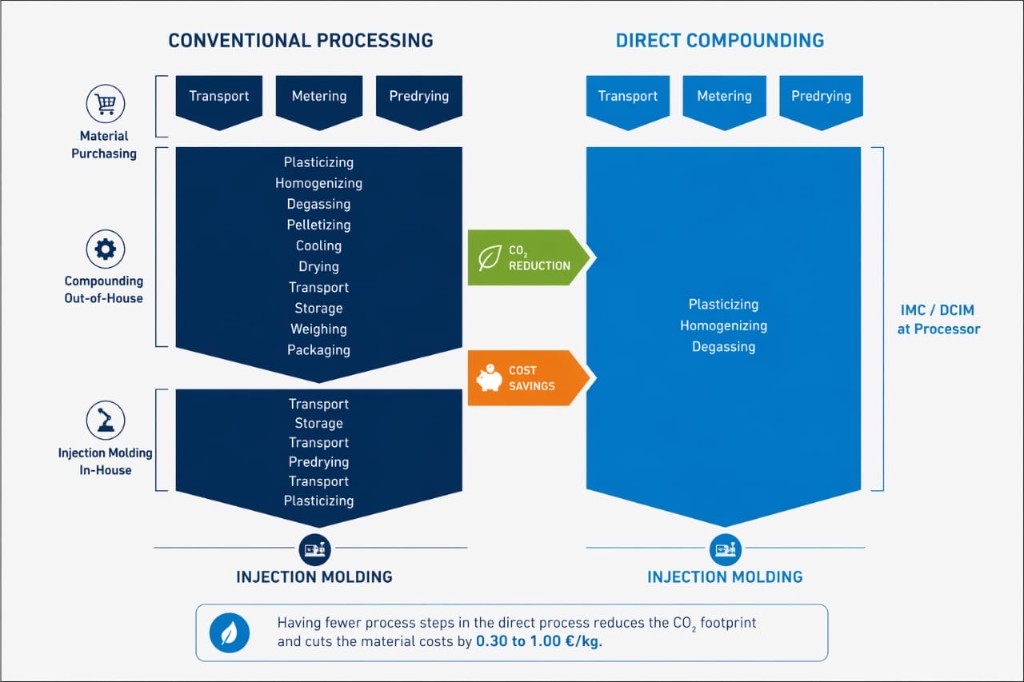
Unlike conventional pellet-based processes, IMC enables direct fiber integration and inline processing, resulting in improved mechanical performance and reduced material handling loss.
The Integrated Line Ensures

  • Consistent material quality
  • Optimized fiber length retention
  • Reduced thermal degradation
  • High process efficiency
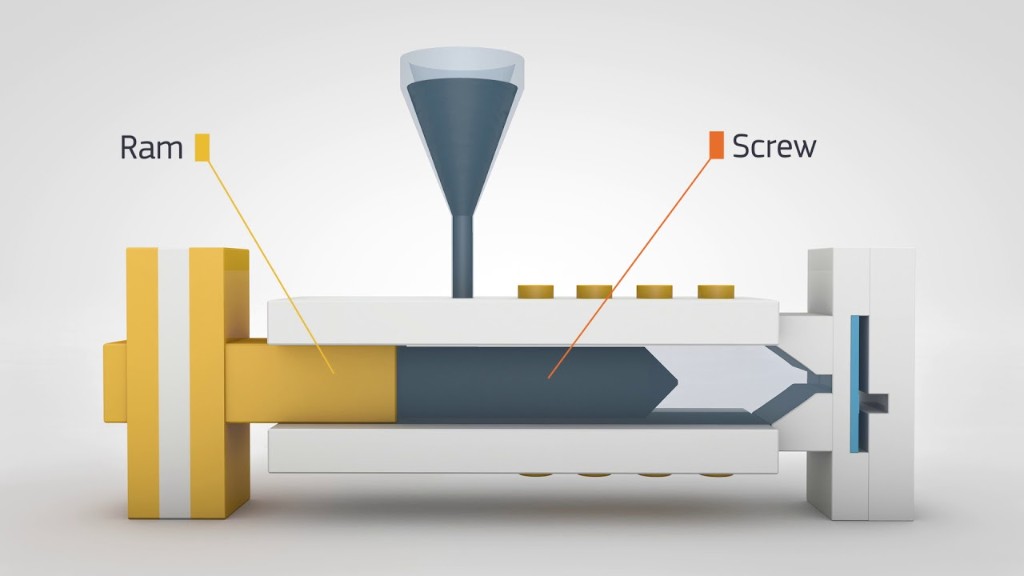
IMC Machine Diagram — Continuous Glass Fibers, Plastic Matrix, Glass Fiber Reinforcement, Platform Scale
IMC Integrated Process — Continuous compounding with injection molding in one line
Process Flow

Continuous Compounding → Injection Molding in One Integrated Process

1

Plasticization

Polymer resin is plasticized in a twin-screw extruder

2

Fiber Integration

Continuous glass fibers are fed and impregnated with molten polymer

3

Buffering

BMC buffer decouples continuous compounding from injection cycle

4

Injection

Injection plunger transfers compound into mould cavity

5

Ejection

Component is cooled and ejected

Note: Continuous melt flow ensures constant material formulation and reproducibility throughout the production process.
Process Comparison Table — IM-SGF, IM-LGF, IMC, FiberForm, PolySet, R-RIM, SCS, FCS, LFI, HP-RTM, Surface-RTM, iPul, Wetmolding
Process Technology Comparison — Stressability, Temperature Resistance, Surface Quality, Automation Level & more
Value Proposition

Why IMC?

Process Efficiency

Short compounding eliminates multiple intermediate steps such as pelletizing, cooling, and remelting — improving material process efficiency and reducing manufacturing cost.

Performance & Sustainability

IMC enables the production of lightweight components at enhanced mechanical and sustainable performance, making it a strong alternative to metal and conventional thermoplastics.

Precision & Productivity

Injection moulding ensures precision and high productivity. IMC enhances it with inline compounding for better material integrity and consistent quality output.

OEM Applications

Typical Automotive Applications

IMC is widely adopted for semi-structural and lightweight mobility components:

Front-end Carriers
Modules
Door Modules
Structural Brackets
Under Hood Housings
Transmission Components
300,000 – 600,000
Typical annual production volumes per application
Key Benefits

Advantages, Material & Production Benefits

Key Advantages

  1. Material cost savings up to 15–20% (₹1.1–1.5/kg cheaper than conventional LFT pellets)
  2. Improved fiber retention → higher stiffness
  3. Energy saving through reduced thermal cycles
  4. Consistent melt behavior → improved part quality
  5. Enhanced cost effectiveness thanks to elimination of pelletizing
  6. Most suitable for recyclables due to lower resin temperature molded
  7. Most suitable for regulatory, utilities and fibers due to high mixing degree

Material Benefits

  1. Long fiber retention
  2. High impact resistance
  3. Improved thermal stability
  4. Weight reduction potential up to 30%
  5. Tailored material combinations

Production Benefits

  1. Short cycle times
  2. Fully automated production
  3. Higher production output/margins
  4. Reduced integration complexity
  5. Inline quality control
Comparison

IMC vs Conventional Long Fiber Thermoplastic

Parameter IMC Technology Conventional LFT
Fiber Length Retention Excellent (long fibers preserved) Moderate (fiber breakage during pelletizing)
Material Cost 15–20% lower Higher (pelletizing overhead)
Thermal Degradation Minimal (single heat cycle) Higher (multiple remelts)
Stiffness Higher Standard
Impact Resistance Superior Good
Process Efficiency Inline compounding (no intermediate steps) Separate compounding + molding
Recyclability Better (lower resin temperature) Standard
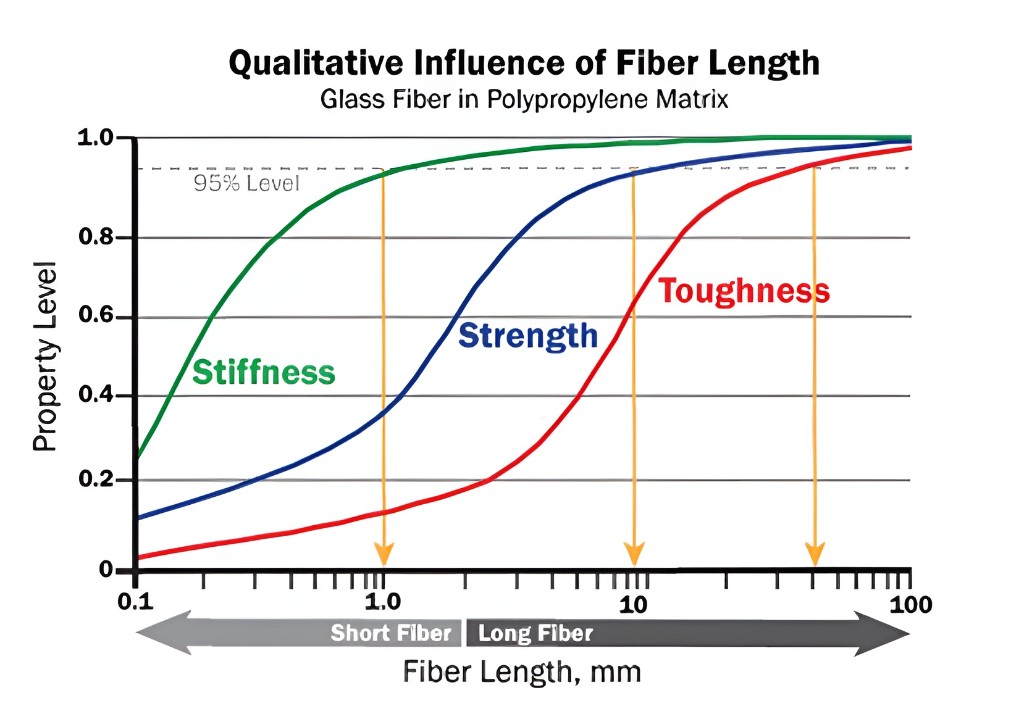
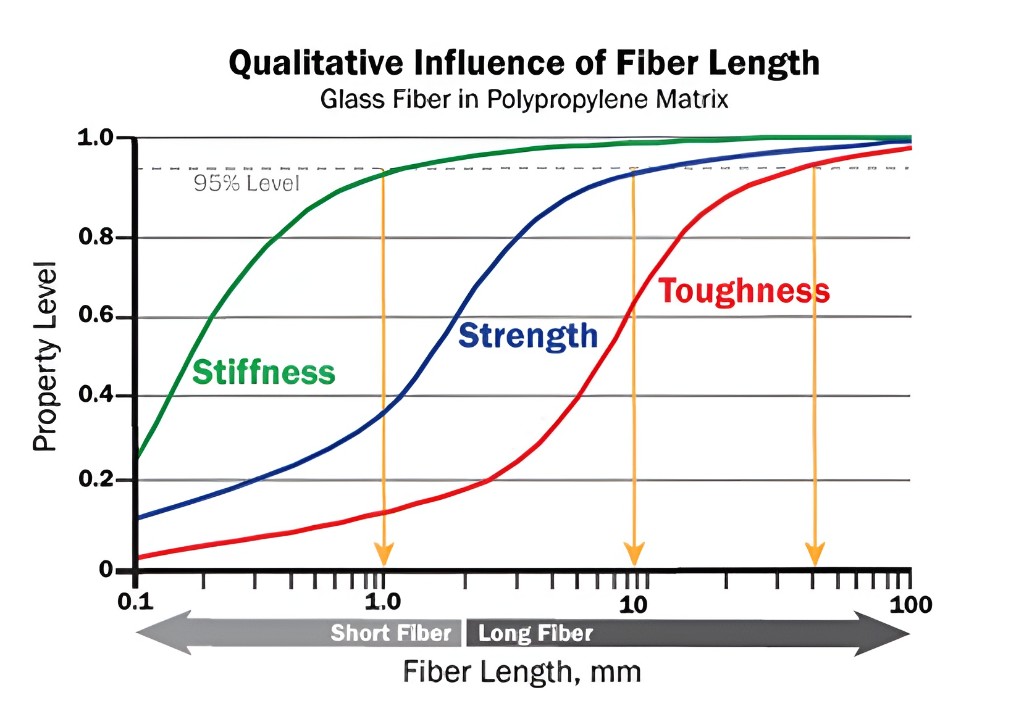
Qualitative Influence of Fiber Length — Stiffness, Strength, Toughness vs Fiber Length in Polypropylene Matrix
Qualitative Influence of Fiber Length — Glass Fiber in Polypropylene Matrix