
Home / Technology / LIM Technology

LIM Technology

Laminate Insert Molding (LIM) — an advanced process combining pre-formed laminate sheets with injection moulding to create high-performance structural and aesthetic thermoplastic components.

LIM Highlights

Laminate Insert Molding (LIM)

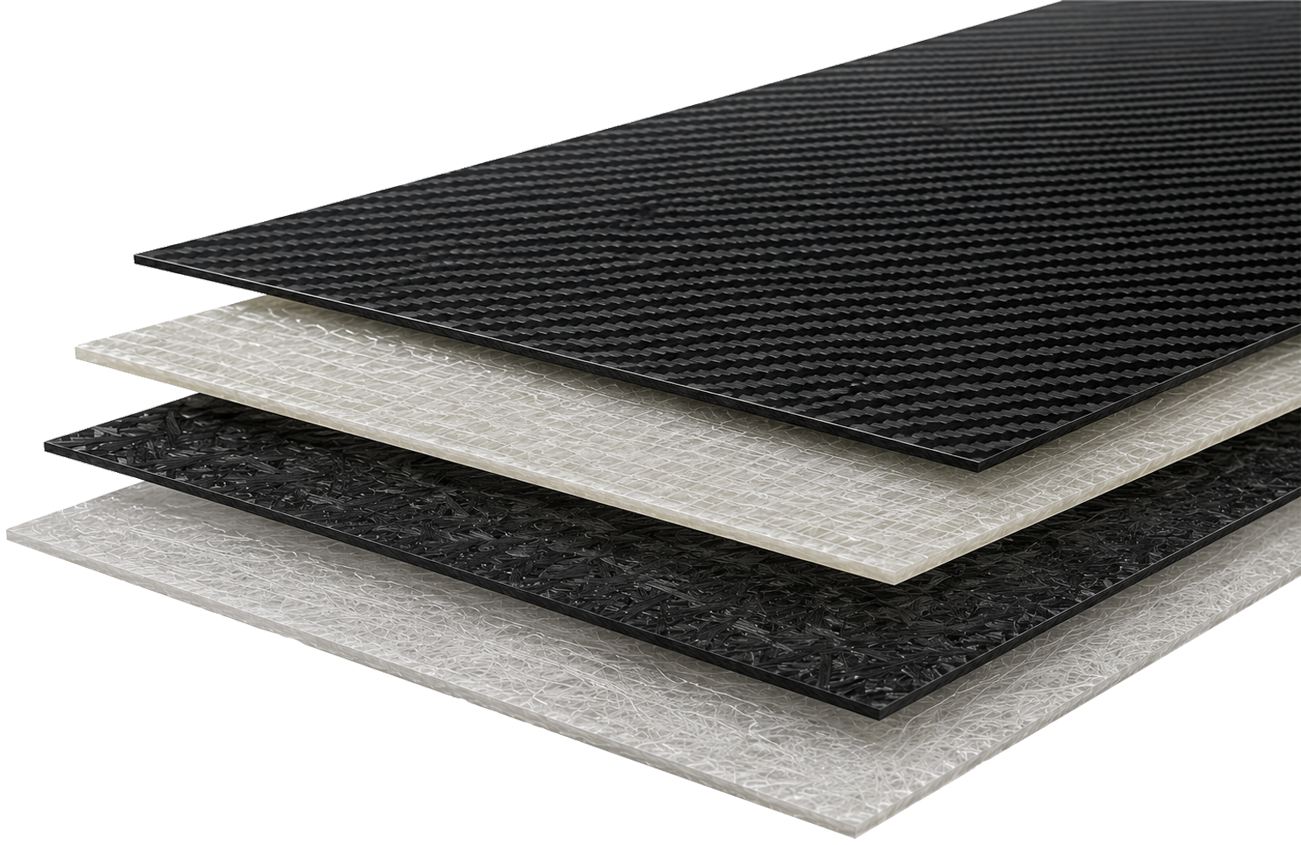
To further improve the strength of fiber-reinforced injection molded parts, our process combines injection molding with thermoforming of organo GF/CF sheets.

Composite Fiber Parts

Composite fiber parts can be manufactured with excellent structural integrity.

Fully Automated & Reproducible

Fully automated and highly reproducible process ensuring consistent output quality.

Weight Reduction & Consolidation

Further weight reduction and part consolidation for lighter, stronger components.

About LIM

Thermoplastic Structural Component with Structural Integration

Laminate Insert Moulding (LIM) is an advanced manufacturing process that combines pre-formed laminate sheets with injection moulding to create high-performance structural and aesthetic thermoplastic components.

Unlike conventional injection moulding or post-lamination processes, LIM enables direct integration of structural layers in a single moulding cycle, resulting in improved part performance and reduced secondary operations.

This Integration Ensures

  • Structural reinforcement through laminate integration
  • Reduced part weight with high stiffness
  • High design freedom with functional integration
  • Improved process efficiency and reduced assembly steps
Process Flow

Laminate Integration + Injection Moulding in One Integrated Process

1

Pick Up Insert

Structural laminate is pre-formed to part geometry

2

Preheat Insert

Laminate insert is placed inside injection mould cavity

3

Transfer to Mold

Thermoplastic melt is injected behind laminate

4

Thermoforming

Polymer bonds with laminate forming structural composite

5

Back Injection

Component is cooled and ejected as finished part

6

Remove from Mold

Finished component removed for quality inspection

Note: Integrated moulding ensures consistent bonding and high surface quality throughout the production cycle.
LIM Process Flow — Pick up insert, Preheat insert, Transfer to mold, Thermoforming, Back injection, Remove from mold
LIM 6-Step Process — From insert pick-up to finished component removal
Value Proposition

Why LIM?

Enhanced Stiffness & Consolidation

Fabric made of continuous fibers in a thermoplastic matrix is heated, formed inside the injection mould, and then back-injected. This enables the integration of ribs for enhanced stiffness and part consolidation.

Crash Performance & Impact

Multi-layer laminate stack enables engineers to control stiffness, strength, crash performance and impact resistance for demanding structural applications.

Precision & Inline Compounding

Injection moulding ensures precision and high productivity. IMC enhances it with inline compounding for better material integrity and performance.

OEM Applications

Typical Automotive Applications

Laminate Insert Moulding is widely adopted for functional interior/exterior components:

Seat Pan and Seat Back
Underbody Assemblies / Door Module
Instrument Panel Supports
Soft Top Compartments
Side Impact Protection
Technical Underhood Components
Semi-structural Components
Center Armrests
Battery Supports
300,000 – 1,000,000
Typical annual production volumes per application
Key Benefits

Advantages, Material & Production Benefits

Key Advantages

  1. Eliminates painting & coating processes
  2. High stiffness-to-weight ratio
  3. Reduced assembly operations
  4. Improved impact resistance
  5. Shorter overall manufacturing chain
  6. Dimensional stability in terms of component assembly
  7. Sustainable option with recyclable thermoplastics

Material Benefits

  1. Lightweight potential upto 30–40%
  2. Reduced tooling & system complexity
  3. Short cycle times, typical of injection molding process
  4. Consistent surface quality
  5. Tailored laminate material combinations
  6. No support structures necessary

Production Benefits

  1. Shorter overall manufacturing chain
  2. Fully automated production capability
  3. Reduced tooling & system complexity
  4. Reduced logistics & handling
  5. Enables thin-wall structural components